Some tattoo trends appear suddenly and disappear just as quickly. Others return again and again, finding relevance across different generations. Sacred geometry belongs firmly in the second category. While the style has gained renewed popularity in recent years, the patterns themselves are anything but new.
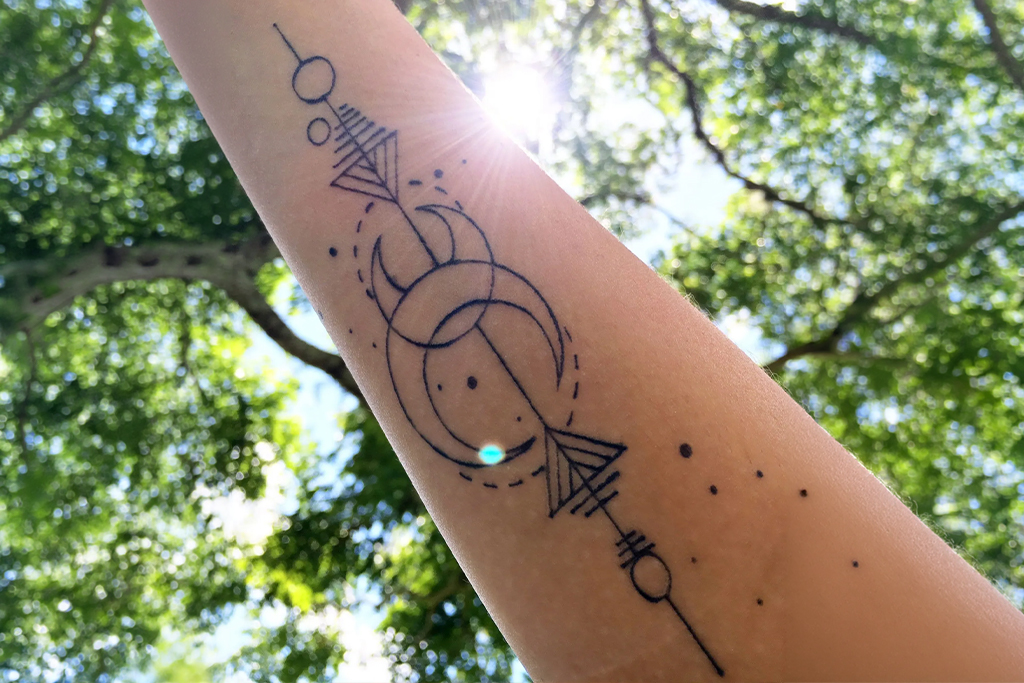
In fact, many of these designs have existed for centuries.
Sacred geometry refers to patterns and shapes that appear repeatedly in nature, architecture, art and spiritual traditions around the world. Circles, triangles, symmetrical grids and repeating geometric forms have long been used to represent balance, connection and order. Today, these same elements are becoming increasingly popular within contemporary tattoo culture.
Part of the appeal lies in their visual impact. Geometric tattoos feel structured and intentional. Every line serves a purpose. Every shape relates to the next. The result is artwork that appears clean, balanced and timeless. In an age where people are often drawn to simplicity and clarity, it is easy to understand why these designs resonate.
Yet the popularity of sacred geometry goes beyond aesthetics. Many people are attracted to the idea that these patterns reflect something larger than themselves. Certain geometric forms can be found throughout nature, from the arrangement of flower petals to the structure of honeycombs and seashells. This connection creates a sense of harmony that many find meaningful, whether they approach it from a spiritual, philosophical or purely artistic perspective.
There is also a cultural dimension to the trend. Geometric patterns have existed across civilisations for thousands of years, appearing in temples, monuments, textiles and traditional art forms. While the specific meanings may differ from one culture to another, the fascination with symmetry and proportion remains remarkably consistent.
This helps explain why sacred geometry feels both ancient and modern at the same time.
The designs carry historical depth while fitting naturally within contemporary tattoo aesthetics. They can stand alone as minimalist pieces or become part of larger, highly detailed compositions. Their versatility allows artists to create tattoos that feel deeply personal without relying on obvious symbols or literal imagery.
The placement of these tattoos often enhances their impact. Repeating patterns can follow the natural contours of the body, creating artwork that feels integrated rather than simply applied. This relationship between design and movement is one reason sacred geometry continues to evolve within modern tattooing.
What makes the style particularly compelling is its ability to mean different things to different people. Some are drawn to its symbolism. Others appreciate its precision and visual balance. Many simply connect with the beauty of the patterns themselves.
At Irezumi, we have seen growing interest in geometric tattoos that combine artistic detail with personal significance. While trends may introduce people to the style, the lasting appeal comes from something deeper.
Sacred geometry reminds us that certain patterns never truly disappear. They continue to resurface because they speak to a timeless human attraction to order, beauty and meaning. That connection feels just as relevant today as it did centuries ago.