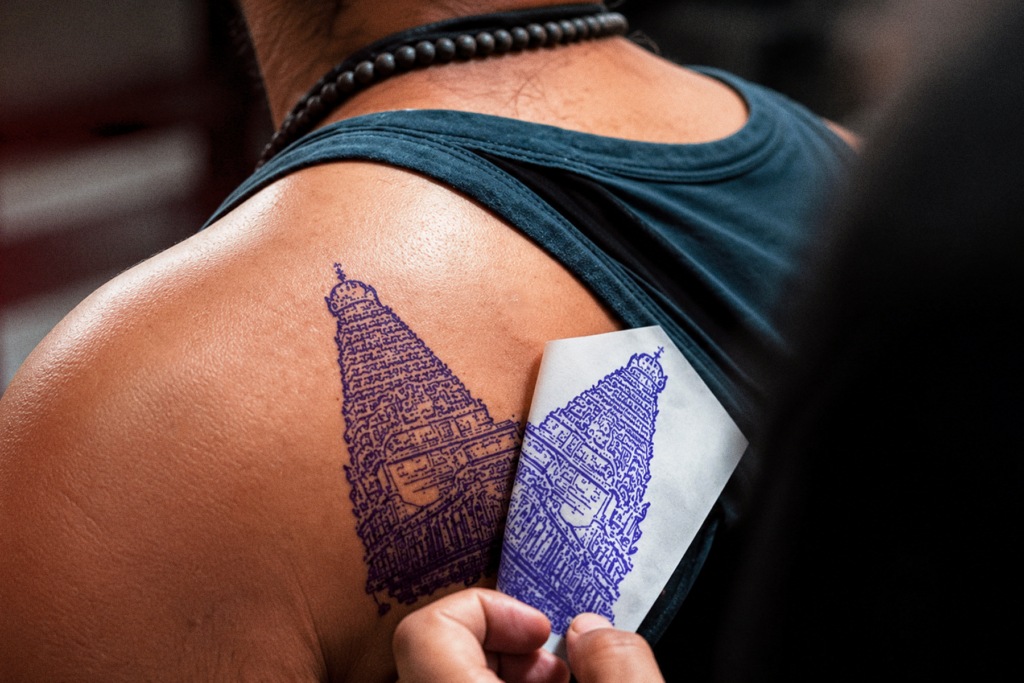
Some forms of art are impossible to separate from the places they come from. Across South India, temple architecture stands as one of the most enduring examples. Towering gopurams, intricate stone carvings and centuries-old craftsmanship continue to shape the visual identity of the region. Today, these influences are finding an unexpected new canvas: tattoo art.
For many people, the attraction goes beyond aesthetics.
South Indian temples are more than architectural landmarks. They hold memories of family visits, festivals, traditions and community. The visual elements found within these spaces often carry emotional significance long before they become tattoo inspiration. When those details are adapted into a tattoo, the result is often deeply personal.
Temple-inspired tattoos are also evolving in interesting ways. Rather than reproducing entire structures, many clients are drawn to specific design elements. A carved pillar, an ornamental border, a lotus motif or a detail from a temple ceiling can become the foundation for a custom piece. These fragments carry the essence of the architecture while allowing the tattoo to remain unique.
Stone carvings are particularly influential. The precision and detail found in traditional sculpture translate remarkably well into tattoo design. Patterns that have existed for centuries can take on new life when interpreted through modern tattoo techniques. The balance between permanence and artistry feels especially fitting given the historical significance of the original work.
There is also a growing appreciation for tattoos that reflect regional identity. For years, much of mainstream tattoo culture drew heavily from global trends and international influences. While those styles remain popular, many people are now looking inward for inspiration. They want artwork that reflects their own experiences, heritage and sense of belonging.
Temple architecture provides a rich source of that inspiration.
The appeal lies partly in its visual complexity. South Indian temples are filled with layers of symbolism, geometry and craftsmanship. Every carving serves a purpose. Every detail contributes to a larger story. This depth allows artists to create tattoos that feel visually striking while carrying a strong connection to culture and history.
What makes these tattoos successful is thoughtful interpretation. A tattoo does not need to replicate a temple exactly to honour its influence. In many cases, the most compelling designs are those that capture the spirit of the architecture rather than its literal form. They draw from tradition while creating something entirely personal.
This approach reflects a broader shift in contemporary tattoo culture. People are increasingly seeking designs that feel rooted rather than borrowed. They want tattoos that tell their own stories while acknowledging the traditions that shaped them.
At Irezumi, we have seen growing interest in temple-inspired artwork that blends architectural detail with modern tattoo design. These pieces often begin with a simple idea but develop into something much richer through conversation and collaboration.
The language of South Indian tattoo art continues to evolve. Increasingly, it is speaking through stone, history and heritage in ways that feel both timeless and new.