What if the secret to a great fine-line tattoo isn’t the design itself, but where you place it? Fine-line tattooing was once strongly associated with tiny, delicate designs. Today, that idea is changing. Artists are increasingly designing tattoos around the natural shape, movement and structure of the body, creating artwork that feels like it belongs there.
Welcome to the rise of anatomy-driven tattoo placement.
What Is Anatomy-Driven Tattoo Placement?
Anatomy-driven placement means designing a tattoo specifically around the body’s natural contours rather than creating a design first and simply finding a place to put it.
The curve of a collarbone, the length of a forearm, the shape of a shoulder or the natural movement of the ribs can all influence how a tattoo is designed.
Instead of asking, “Where can I fit this tattoo?”, the approach asks, “How can this tattoo follow the body?”
This subtle difference can completely change the final result.
Fine-Line Tattoos Are Getting More Intentional
Fine-line tattoos are known for their delicate lines, minimal shading and refined appearance. But modern fine-line tattoo designs are moving beyond the idea that smaller automatically means better.
Artists are experimenting with elongated botanical designs that follow the arm, delicate illustrations that wrap around the wrist and flowing compositions that complement the body’s natural curves.
The tattoo doesn’t simply sit on the skin it moves with it.
This creates a more balanced and intentional appearance, particularly when the design is viewed from different angles.
Why Placement Matters So Much
Your body isn’t a flat canvas. Every area has different curves, muscle structures, movement and levels of skin tension.
A design that looks perfect on paper may not have the same visual impact when placed on the body. That’s why experienced tattoo artists consider factors such as body shape, proportions, movement, visibility and how the tattoo may age before finalising placement.
For example, a long floral design may naturally complement the forearm, while a curved design could work beautifully around the shoulder or collarbone.
The goal isn’t simply to find an empty space. It’s to find the right relationship between the artwork and the body.
From Minimalist Tattoos to Custom Body Art
This trend is also changing how people approach custom tattoos. Rather than selecting a popular design from a catalogue, clients are increasingly working with artists to create artwork specifically for their body.
That means the same concept can look completely different depending on the person’s anatomy and chosen placement.
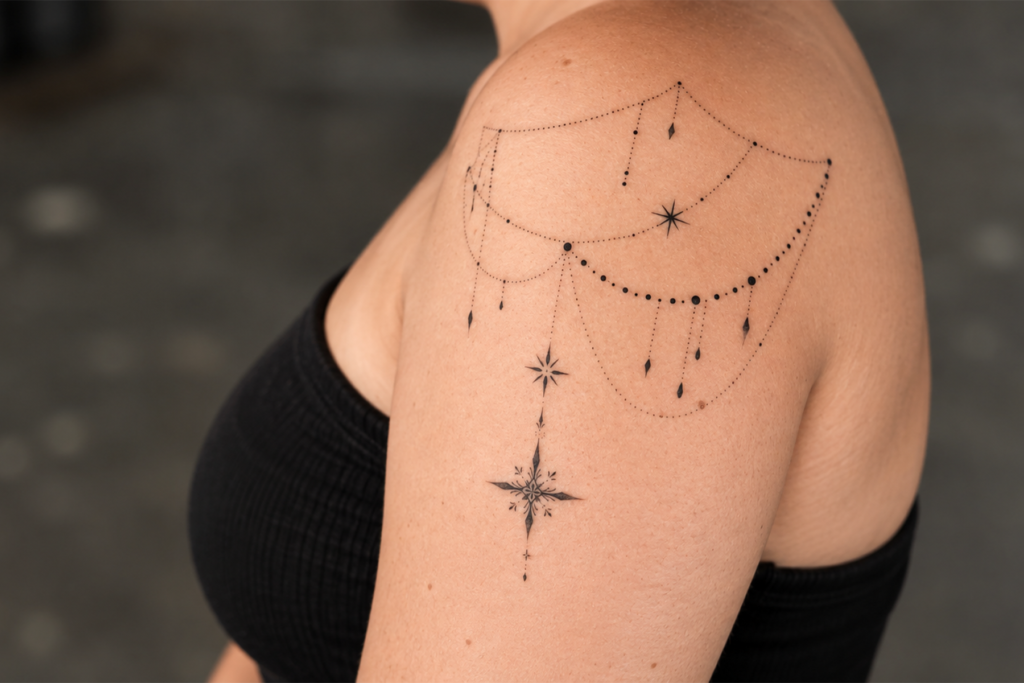
A fine-line snake can follow the natural length of an arm. A botanical piece can trace the collarbone. A delicate ornamental design can frame the shoulder.
These aren’t just tattoo designs they’re body-aware compositions.
The Future of Fine-Line Tattooing
The next evolution of fine-line tattooing may not be about making tattoos smaller or more detailed. It may be about making them more intentional.
As clients become more interested in personalised tattoo ideas, anatomy-driven placement gives artists another way to create artwork that feels unique to the individual.
Because sometimes, the best tattoo isn’t simply a beautiful design.
It’s a beautiful design that looks like it was made for your body.