Some designs never truly disappear. They may evolve, adapt and reappear in different forms, but their essence remains intact. Traditional motifs are a perfect example. Whether drawn from cultural art, architecture, textiles or symbolism, these visual elements continue to inspire tattoo designs across generations.
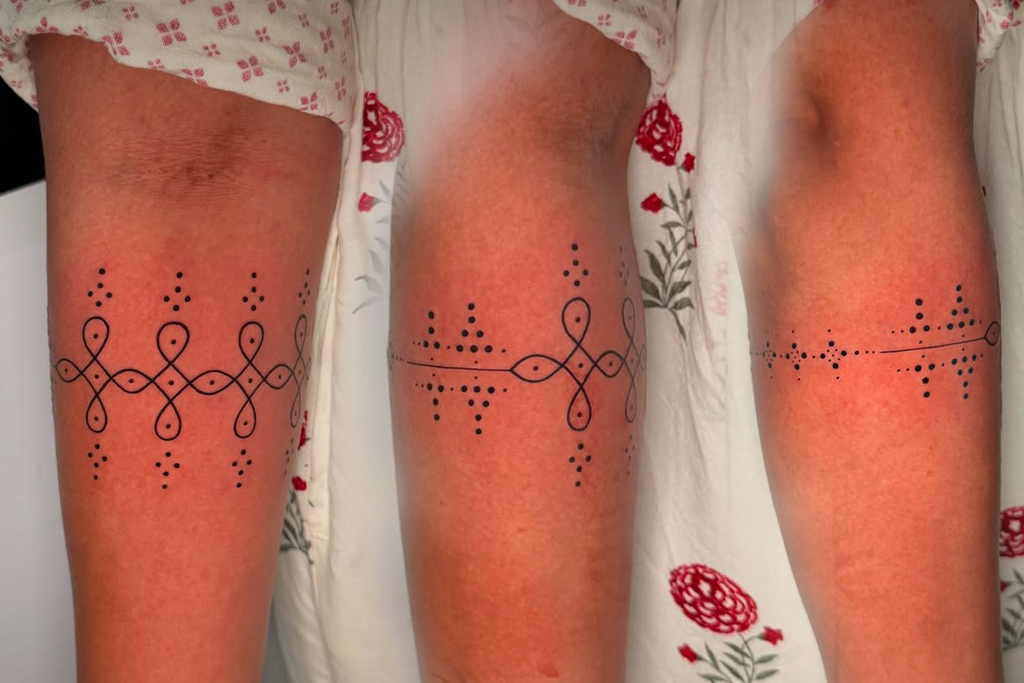
Yet not every traditional motif feels contemporary.
The difference often lies in how it is interpreted rather than where it comes from.
Many people assume that making a design modern means abandoning its original character. In reality, the opposite is often true. The most successful contemporary tattoos preserve the spirit of a traditional motif while presenting it in a way that feels relevant to the individual wearing it.
This is where design becomes important. A traditional symbol may carry centuries of history, but a tattoo exists on a living, moving canvas. Artists must consider placement, scale, flow and composition. A motif that appears on a temple wall, a piece of jewellery or a textile pattern may need to be reimagined before it works effectively as body art. The goal is not to copy the original exactly. It is to translate it.
Simplicity often plays a role in that process. Contemporary tattoo design tends to favour clarity and intentionality. Rather than reproducing every detail, artists may focus on the strongest visual elements of a motif and build around them. This allows the design to feel clean and modern while retaining its cultural identity.
Personalisation is equally important. Traditional motifs become more meaningful when they connect to an individual’s story. A design inspired by heritage feels far more powerful when it reflects personal experiences, family connections or cultural roots. This transformation from shared symbol to personal artwork is often what makes the tattoo feel contemporary.
There is also a growing shift in how people engage with tradition itself. Younger generations are embracing cultural influences without feeling restricted by them. They are interested in heritage, but they want to interpret it through their own perspective. Tattoo art provides an ideal space for that conversation.
Across South India, this can be seen in the growing popularity of tattoos inspired by temple architecture, traditional patterns, Tamil script and regional artistic motifs. Rather than recreating these elements exactly as they appear in their original context, clients are working with artists to develop designs that feel individual and relevant to modern life.
That balance is what gives these tattoos their strength. A traditional motif does not become contemporary because it changes completely. It becomes contemporary because it finds a new way to communicate. The history remains. The meaning remains. What changes is the form through which it is expressed.
At Irezumi, we often see clients searching for that balance between heritage and individuality. The most memorable tattoos are rarely those that choose one over the other. They are the ones that allow both to exist together.
When tradition and personal expression meet, a familiar symbol can feel entirely new again.